
⮞ Département SP ⮞ Thématiques de recherche
Animateur : Laurent Bramerie
Le département Systèmes Photoniques développe des systèmes de télécommunications optiques à très haut débit, avec un objectif de compromis entre performances, débit et consommation énergétique. Les solutions photoniques étudiées peuvent être développées au sein de l’Institut Foton ou en collaboration avec des partenaires académiques et industriels.
Les travaux portent sur la caractérisation physique et l’évaluation de composants et solutions photoniques, puis sur leur intégration dans des sous-systèmes et systèmes de communications optiques. Cette approche permet de relier les propriétés physiques des technologies étudiées à leurs performances en transmission, du composant jusqu’au système.
Ces activités couvrent différents environnements de communication, des réseaux d’accès aux interconnexions et aux communications en espace libre, notamment spatiales. Elles ouvrent également des perspectives vers des technologies émergentes, telles que les communications quantiques.
Nos activités en lien avec cette thématique
-
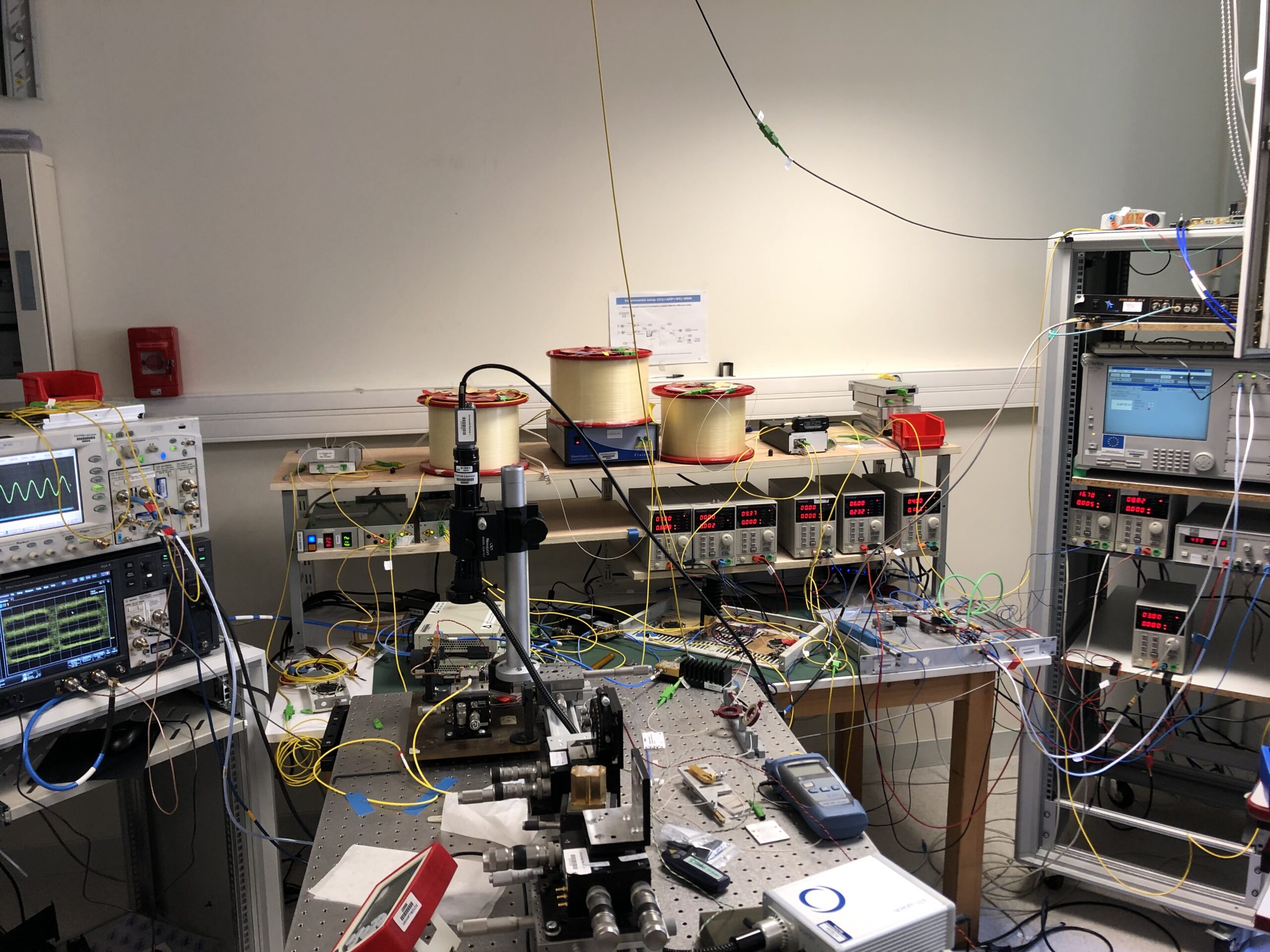
Evolution of Optical Technologies for High-Speed Access Networks
The growing demand for data, mainly for fixed and mobile access networks, is pushing telecommunications players to develop or even reinvent networks. The new uses offered to network users, such as new generations of mobile networks, telemedicine, the development of teleworking, videoconferencing, exchanges by videophone for personal use or virtual reality are the main reasons… → Lire la suite
-
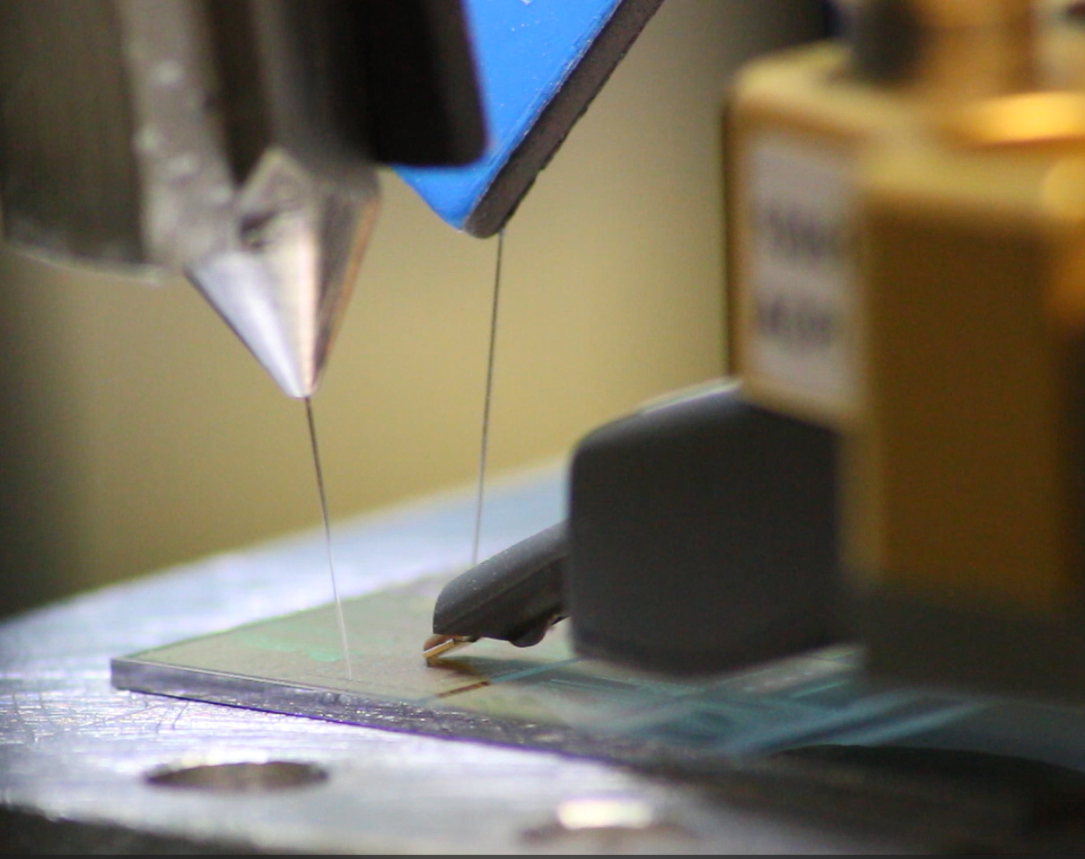
Applications of Silicon Modulators for High-Bit-Rate Optical Communications
Silicon photonics offers solutions to meet the needs of increasing transmission capacities within data centers, by proposing low-cost components with reduced energy consumption, compatible with large-scale production leveraging on industrial microelectronics fabrication processes. Among these components, modulators are key elements whose function is to convert the information to be transmitted from the electrical to the… → Lire la suite
-
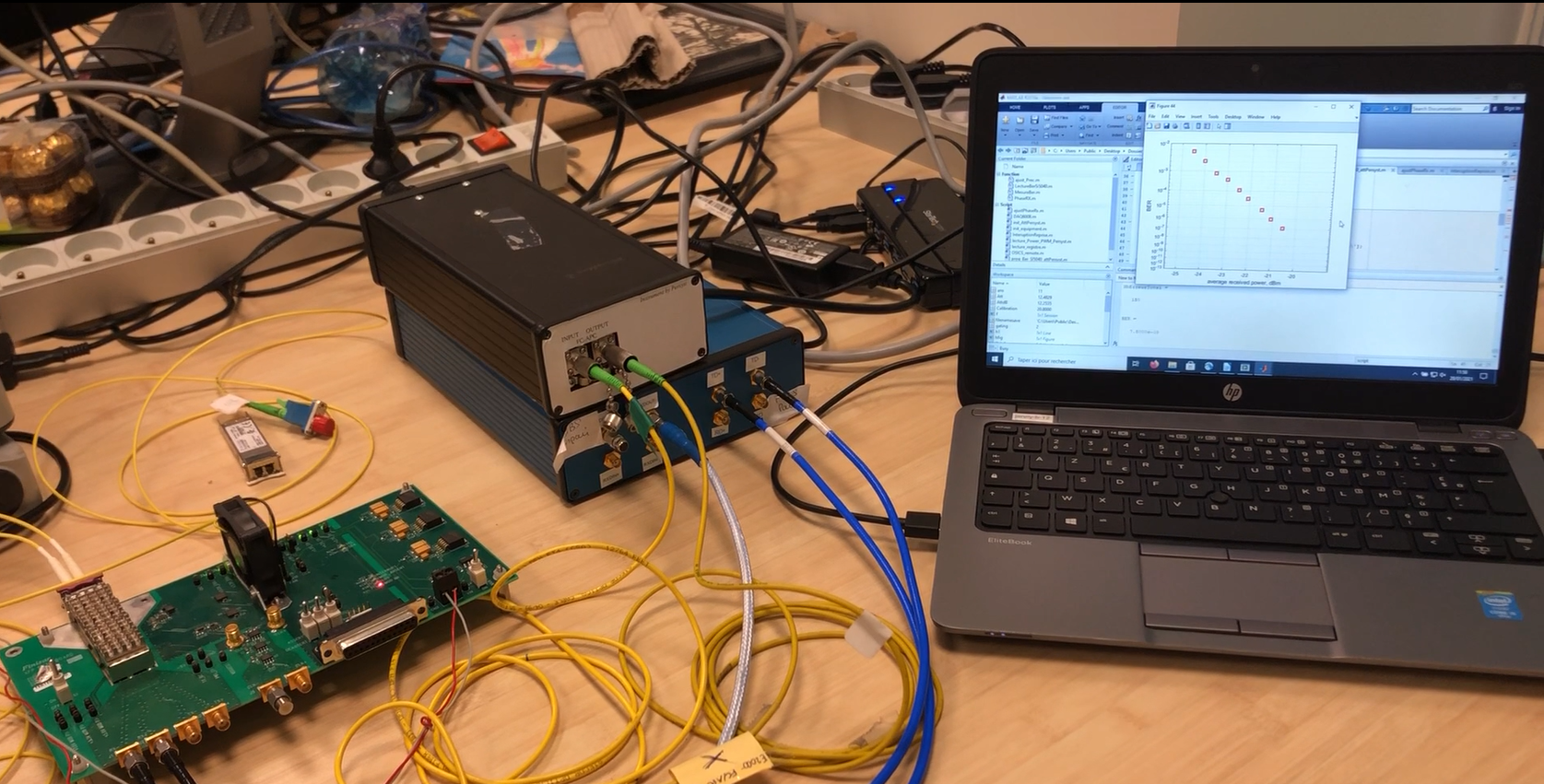
Coherent beam combining of wavelength-division multiplexed telecom signals
Free-space optical communication offers advantages over radio-frequency systems, including higher bandwidth and improved security, but requires high beam quality and power to overcome atmospheric disturbances. To tackle nonlinear effects and power scaling limitations, one solution is coherent beam combining (CBC), where signals are split, amplified, and recombined coherently using active phase-locking. The main challenge is… → Lire la suite
-
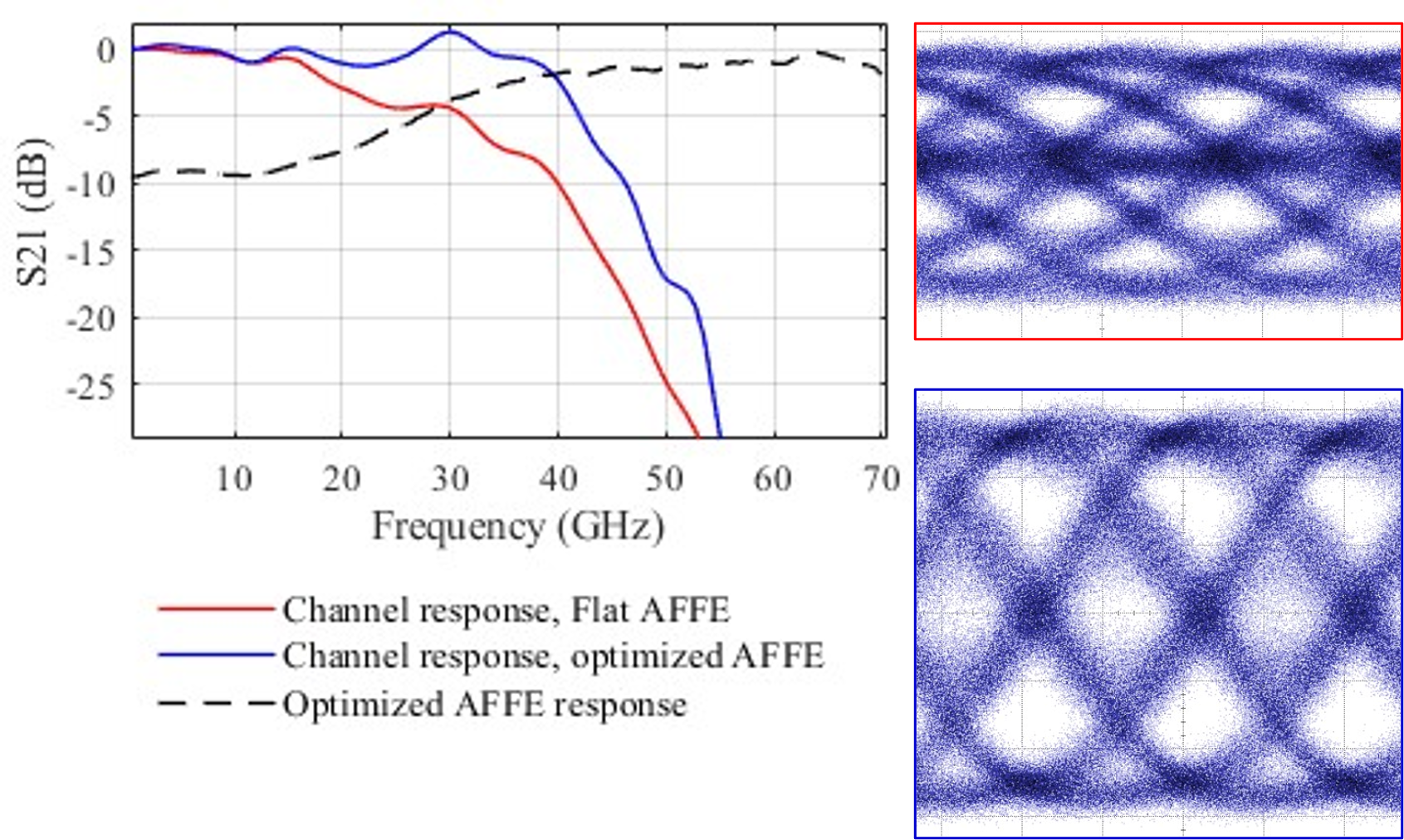
Enhancement of optical access networks through analog equalization
These research efforts focus on developing an innovative method to optimize the coefficients of an analog Feed-Forward Equalizer (FFE-ASP) for 50G-PON systems. The approach leverages a Minimum Mean Square Error (MMSE)-based Least Mean Squares (LMS) algorithm, addressing the challenge of identifying optimal equalizer settings in analog environments. This challenge is amplified by the vast number… → Lire la suite
-
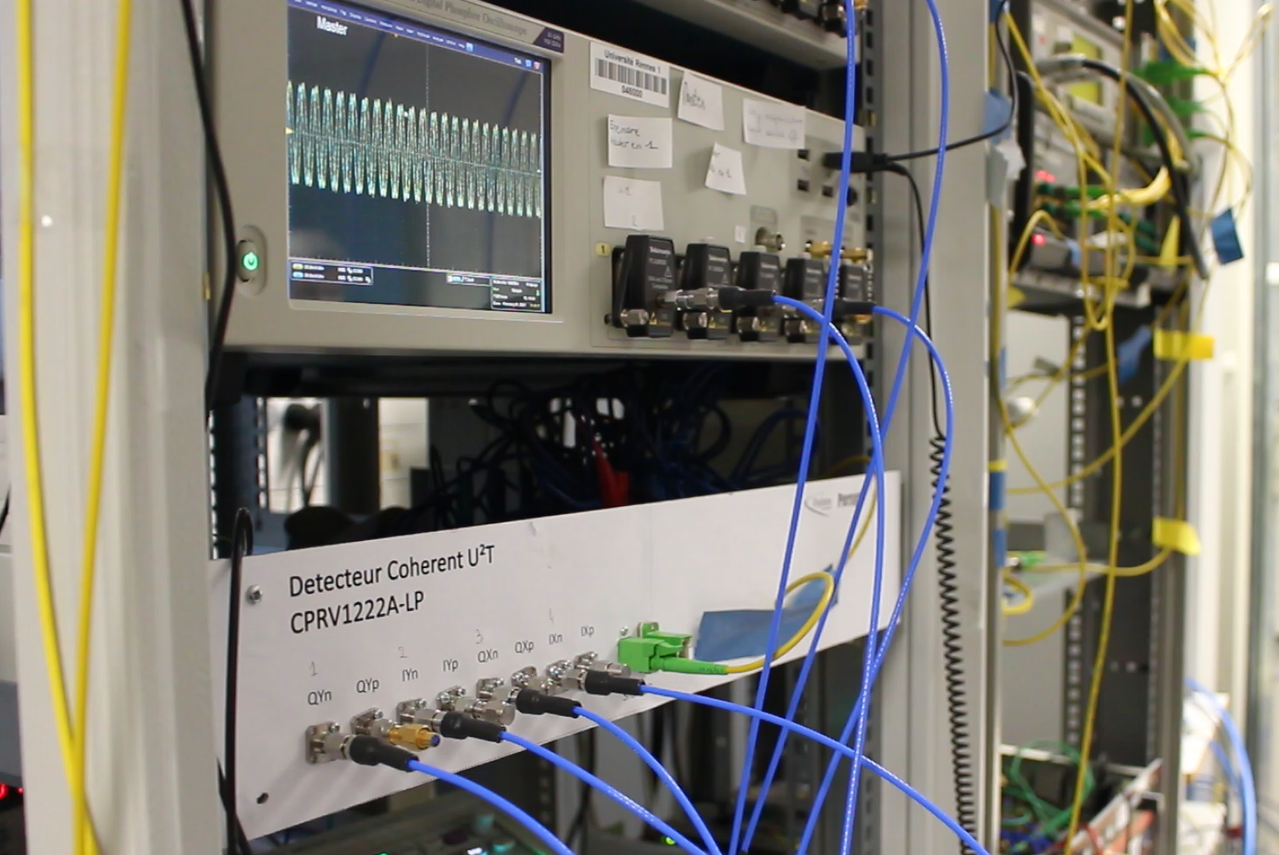
Characterization and Mitigation of Nonlinear Effects in Very High-Power Optical Communication Systems
High-power optical amplification is a key requirement for future high-capacity Free-Space Optical (FSO) feeder links. In particular, GEO-to-ground links experience very high free-space losses, of about 290 dB over a 36,000 km distance, making the generation of very high optical power essential to close the link budget. However, operating optical amplifiers at such power levels… → Lire la suite
-
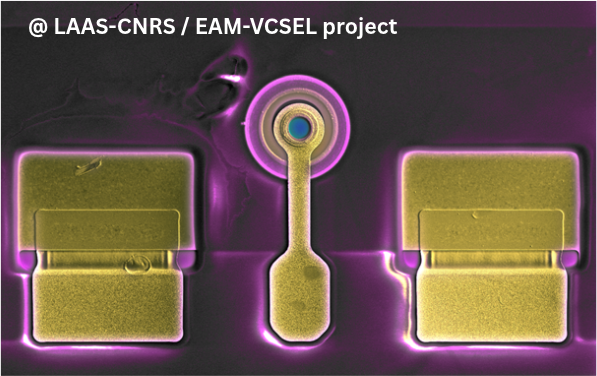
Cost- and energy-effective laser-source technology for short range Tb/s optical data communication links
Because of our unrestrained use of digital technologies, data centers are overloading electrical grids and demanding huge amounts of water and energy. Faced with our inability to envision new paradigms for our societies, researchers work on energy-efficient and high bandwidth solutions meeting data centers bandwidth needs. In this work, LAAS-CNRS has developed a new surface… → Lire la suite
Compétences et équipements associés
Ces recherches s’appuient sur des matériaux et structures réalisés par des laboratoires académiques (dont le département OHM) ou des industriels ainsi que sur une interaction très forte avec les outils de la plate-forme Persyst (lien vers la plateforme).
- Caractérisations de composants et dispositifs opto-électroniques de nouvelle génération : composants photoniques intégrés sur silicium, transmetteur et modulateur faible consommation pour le très haut débit.
- Des domaines d’applications très variés : réseaux d’accès, réseaux longue distance, communications en espace libre, communications THz, communications dans le visible.
- Compétences à la frontière de la couche physique et des applications télécoms: traitement du signal, non-linéarité, multiplexage spatial.