PhD
GAC Benjamin


UMR 6082
PhD
L’Institut FOTON possède une forte expertise sur l’étude de composants et fonctions optiques dédiés aux systèmes de communications optiques à très haut débit. Les recherches sur les Communications Optiques concernent l’étude de composants passifs et actifs afin de réaliser des
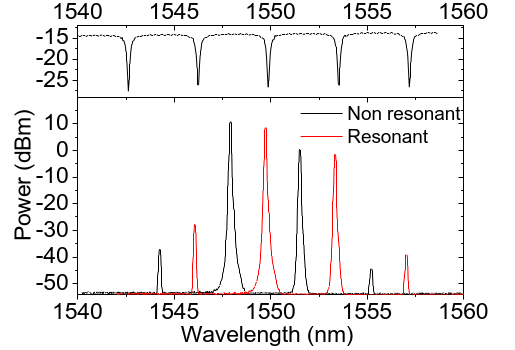
Overview The Photonic Systems (SP) department has developed extensive expertise in the design and fabrication of integrated photonic devices based on chalcogenide glasses, exploiting their third-order nonlinear optical properties, the interaction between optical and acoustic waves for Brillouin scattering, and
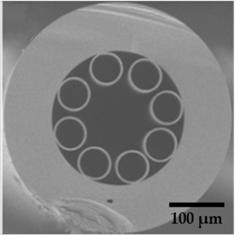
Application context: On-board monitoring of kerosene combustion residues⇒ Optimization of fuel combustion + prevention of premature aircraft engine ageing Technical challenges: Remote measurements, compact system, and operation in harsh environments⇒ Development of a sensor based on a hollow-core anti-resonant fiber
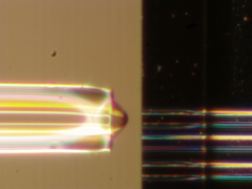
Couplage optique : Lié aux thématiques Optique Guidée et Capteurs, Physique des lasers et applications et Communications optiques
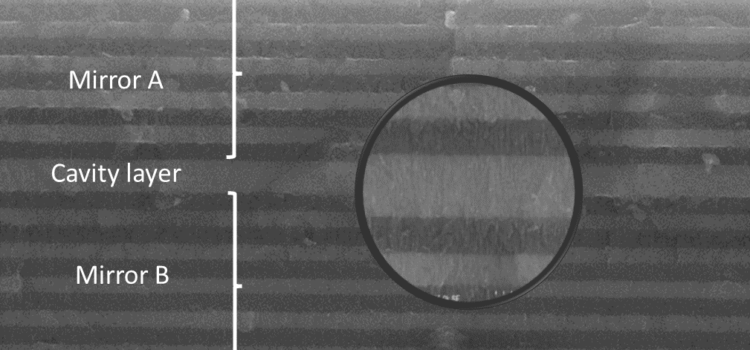
The Photonic Systems (SP) department has extensive expertise in integrated photonics, developing optical materials and integrated photonic circuits, while investigating their design and fabrication to implement on-chip optical functions. For this purpose, the team relies on the Nano and CCLO
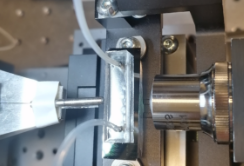
Cross-cutting activities: Blue Photonics The Photonic Systems (SP) team has extensive expertise in the development of miniaturized integrated photonic sensors for the detection of gases and liquids, particularly water pollutants. These sensors operate over a broad wavelength range, from the
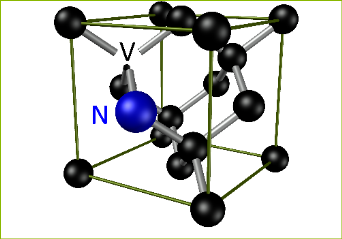
Nitrogen-vacancy (NV) color centers in diamond possess an energy-level structure similar to that of atoms. Unlike atoms, which are typically used in gaseous form and move freely due to thermal motion, NV centers are embedded within the diamond crystal lattice
Lab’Optic regroupe Orange Innovation, l’Institut FOTON et le Lab-STICC et vise à améliorer les réseaux optiques. Il s’appuie sur l’équipe SP de l’Institut Foton et le Lab-STICC, qui comprend des membres de l’IMT Atlantique et de l’ENIB. La création de